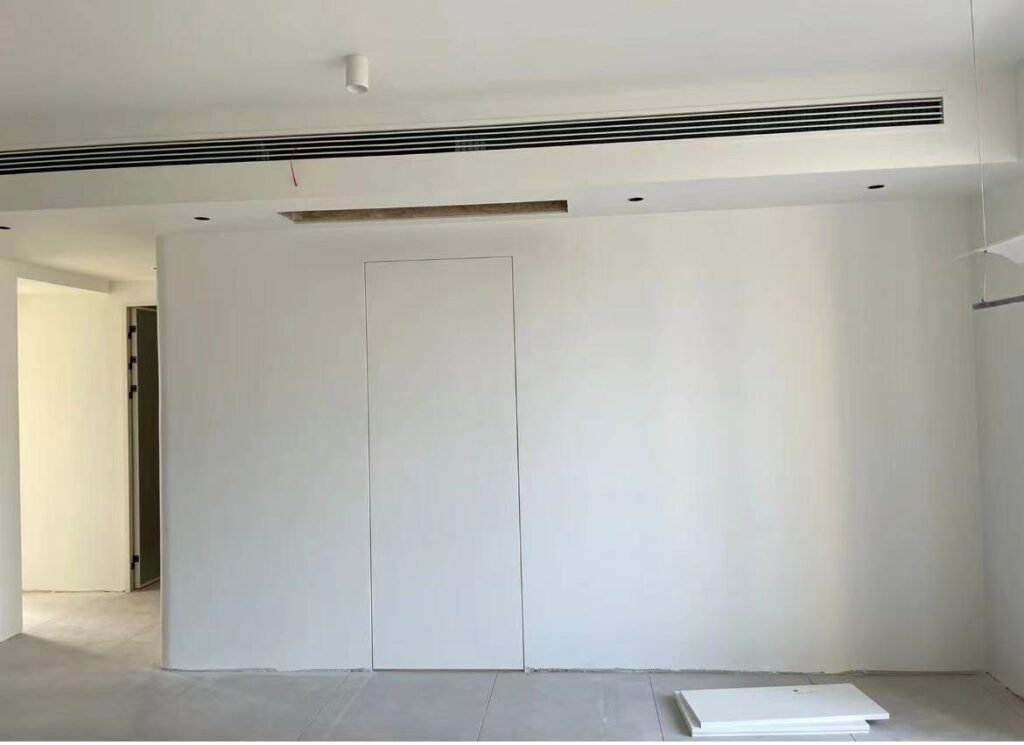
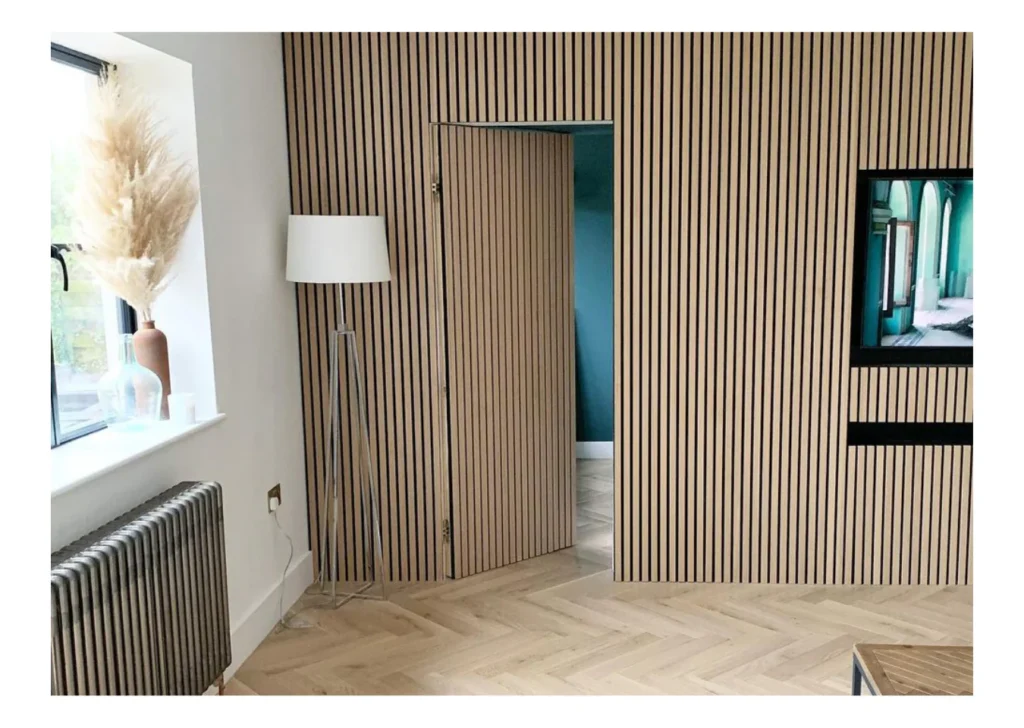
1. Definition & Core Concept
An invisible door (or hidden door) is a flush-mounted architectural element that seamlessly integrates with surrounding walls or surfaces through precision engineering and material matching. Unlike traditional doors, it eliminates visible frames/handles, achieving near-perfect camouflage in both residential and commercial spaces8.
2. Working Mechanism
Modern invisible doors operate through three key systems:
a. Structural Integration
- Material Alignment: Doors adopt identical textures/colors as adjacent walls (e.g., gypsum, wood veneer, or mirrored panels)
- Recessed Hardware: Hidden hinges and push-to-open latches maintain surface continuity
b. Motion Technology
- Pivot Systems: Full-height rotating mechanisms enable 180° silent operation (common in glass/metal doors)
- Magnetic Locks: Electromagnetic seals secure doors without protruding bolts
c. Optional Smart Features
- RFID access (commercial use)
- Pressure-activated sensors (healthcare/security sectors)
3. Types of Invisible Doors
| Type | Materials | Best For |
|---|---|---|
| Full-wall Camouflage | Drywall, MDF | Modern homes, galleries |
| Reflective Surface | Tempered glass with mirror finish | Retail stores, offices2 |
| Textured Blending | 3D wall panels, wood composites | Hotels, luxury villas |
| Bookcase Door | Custom shelving + wood | Libraries, studies |