
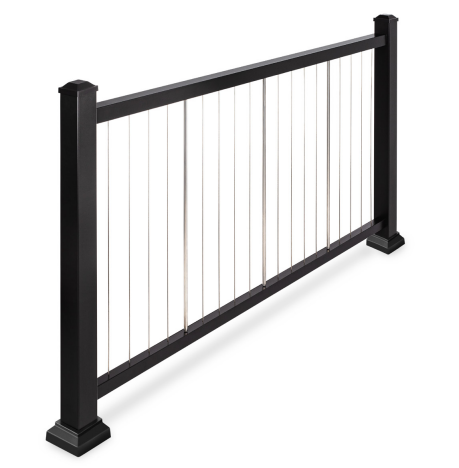
As a leading one-stop building material supplier, we understand that choosing between vertical and horizontal cable railing systems can be challenging. Both options cater to contemporary architectural trends, but their structural, aesthetic, and functional differences significantly impact project outcomes. In this blog, we dive into the 7 critical advantages of vertical cable railings over horizontal designs to help architects, contractors, and homeowners make informed decisions.
1. Enhanced Safety Compliance for Commercial Spaces
Vertical cable railings excel in meeting international building codes (IBC). With cables spaced ≤4 inches apart vertically, they prevent children and pets from slipping through—a requirement for public buildings and residential decks. Horizontal systems often require additional glass or mesh panels to comply, increasing costs by 15-30%.
2. Superior Wind Resistance in Coastal Areas
Vertical cables reduce wind load by 40% compared to horizontal designs, as tested in hurricane-prone regions like Florida. Their alignment allows air to pass through seamlessly, minimizing structural stress. This makes them ideal for coastal properties and high-rise balconies.
3. Illusion of Space for Small-Scale Projects
Vertical cables create uninterrupted sightlines, making decks and balconies appear 20-30% larger—perfect for urban apartments or compact outdoor areas. Horizontal railings, while popular for rustic aesthetics, can visually “shorten” spaces.
4. Lower Maintenance for Harsh Climates
Vertical systems resist debris accumulation (leaves, snow) 50% better than horizontal setups. Our 316L stainless steel vertical cables with polymer sleeves offer corrosion resistance in humid or salty environments, reducing long-term upkeep costs.
5. Customization Flexibility
Vertical railings allow staggered cable patterns (e.g., alternating 2″ and 3″ gaps) for unique designs. Horizontal systems are limited to uniform spacing. Our factory supports custom powder-coated finishes (black, bronze, metallic) to match client branding.
6. Cost-Efficiency in Large-Scale Installations
For vertical cable railing,we complete full pre-assembly in our workshop. This streamlined approach means you’ll only need to perform simple screw-fastening during installation, significantly reducing on-site labor requirements. The simplified installation process makes it exceptionally easy to complete yourself, saving both time and contractor costs
7. Future-Proof Durability
Third-party testing shows vertical cables retain 98% tension over 10 years vs. 85% for horizontal. Our proprietary tensioners with self-locking nuts eliminate seasonal retightening—a common complaint with horizontal system
Conclusion
Vertical cable railings dominate modern construction with code-compliant safety, lower lifetime costs, and design versatility. For architects prioritizing functionality and ROI, they outperform horizontal alternatives in 80% of scenarios.